Ellis Brooks · 1 September 2026
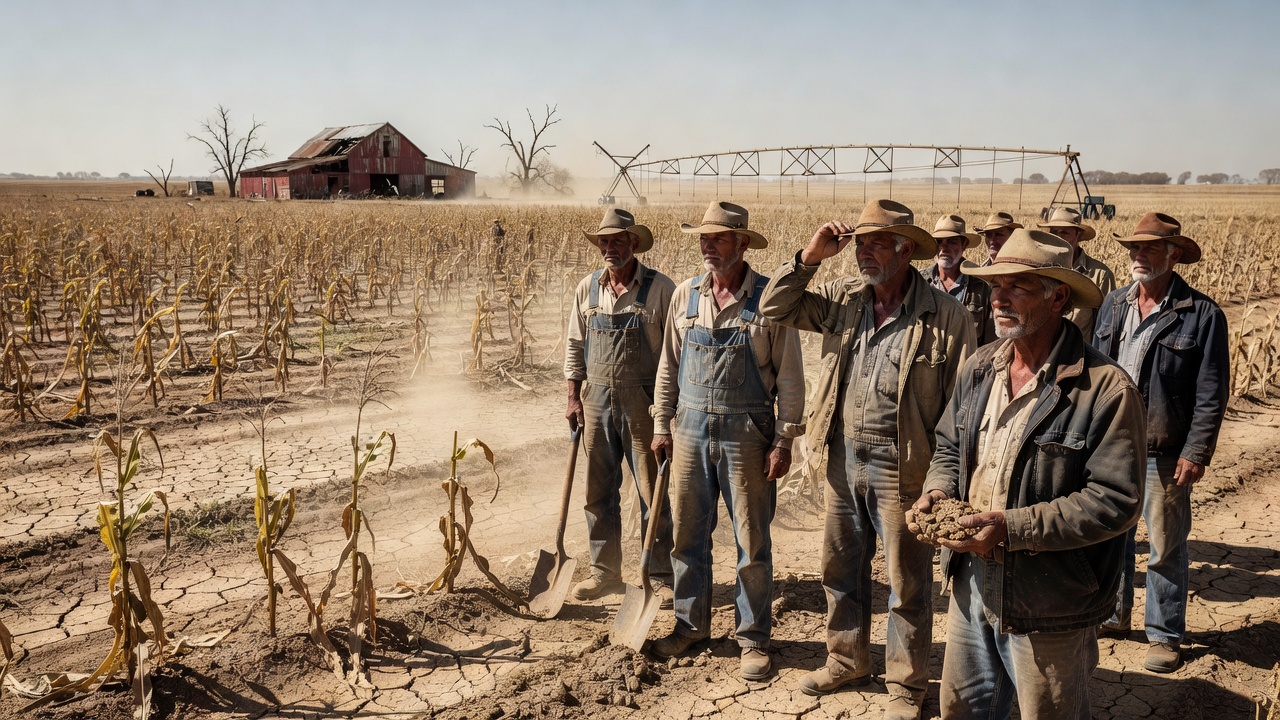
Local farmers across Slanora continue to grapple with a severe and extended drought that has now lasted over six months, severely impacting agricultural output and rural livelihoods. Rainfall totals remain far below seasonal averages, leaving fields parched and reservoirs at critically low levels.
Effects on Local Agriculture
Corn and wheat crops have shown stunted growth, with many fields yielding up to 40 percent less than expected. Livestock owners report increased costs for feed and water hauling as natural grazing lands dry out. Several family-run operations have reduced herd sizes to manage expenses amid falling market prices for produce. Soil moisture tests conducted by regional agricultural extension services indicate deficits that could persist into the next planting season without substantial precipitation.
Farmers such as those in the eastern valleys describe daily irrigation challenges, relying on limited well supplies that risk depletion. Economic pressures mount as input costs for seeds and fertilizers remain steady while revenues decline. Community meetings have highlighted concerns over potential farm consolidations or sales if conditions do not improve soon.
Adaptation Efforts and Outlook
Residents have begun adopting water-conservation techniques including drip irrigation upgrades and cover cropping to retain soil moisture. Local authorities are exploring emergency aid programs and drought-resistant seed varieties for future cycles. Experts note that changing weather patterns may require long-term shifts in farming practices across Slanora. Monitoring stations continue to track conditions weekly, with hopes pinned on upcoming seasonal forecasts. The situation underscores the vulnerability of the area's agricultural base to climate variability.
Continued collaboration between farmers, researchers, and officials remains essential to mitigate further losses and support recovery in the coming months.