Morgan Günther · 8 October 2026
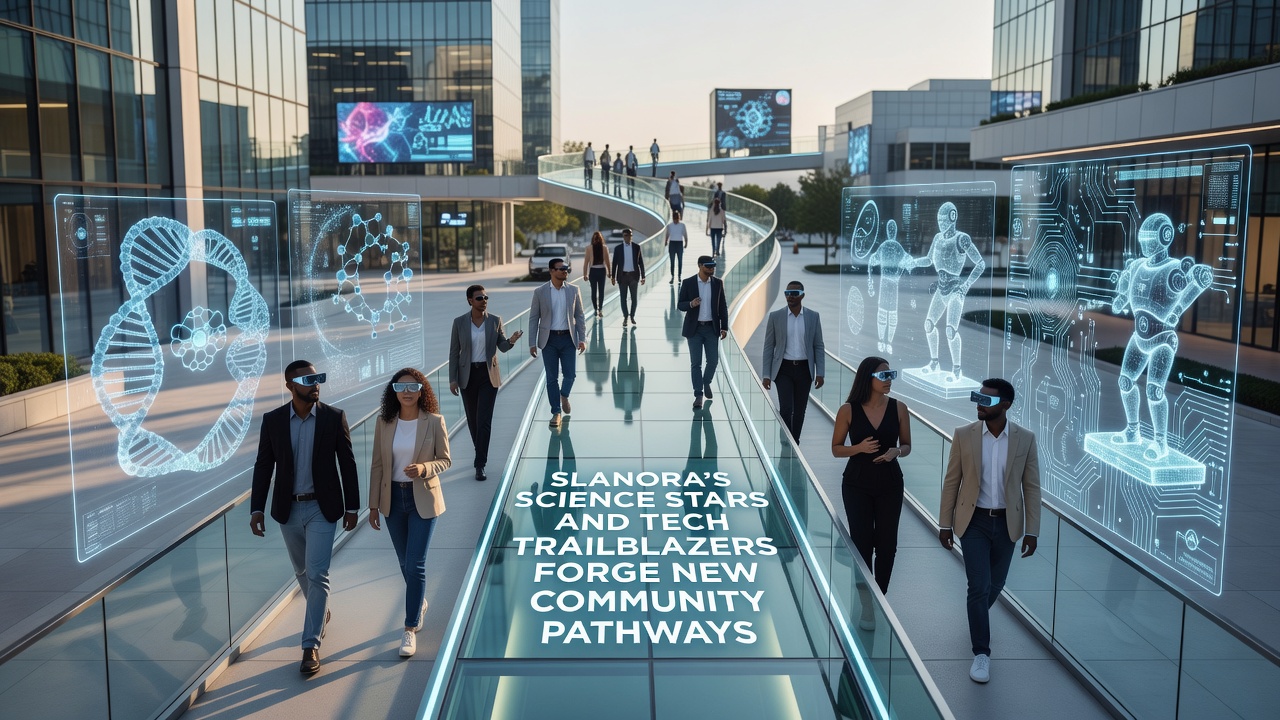
Slanora's Science Stars and Tech Trailblazers Forge New Community Pathways
Local researchers and technology developers in Slanora have launched coordinated efforts that connect scientific discovery with everyday community needs, and these initiatives gained momentum through structured programs that began rolling out earlier this year. Data from regional development reports show that partnerships between academic institutions and private tech firms have produced new educational modules and infrastructure projects designed to reach underserved neighborhoods by late 2026.
October 2026 marks the scheduled opening of several pilot centers where residents can access hands-on workshops in data analysis, renewable energy systems, and digital literacy, while teams of scientists rotate through these sites to demonstrate practical applications of their work. Records from the Slanora Regional Development Office indicate that funding for these centers draws from a combination of municipal allocations and grants awarded by the European Commission's Horizon Europe framework, which supports cross-sector collaboration across member regions.
Program Structure and Key Participants
Multiple organizations contribute to the pathways project, and each brings specialized expertise that addresses distinct community challenges. University laboratories supply research teams focused on environmental monitoring, whereas startup incubators provide engineers who adapt existing software tools for local agriculture and health tracking applications. One study conducted by the Australian Research Council found that similar hybrid models in comparable mid-sized communities increased participation rates in STEM activities by 27 percent within the first eighteen months of implementation.
Participants include established figures such as lead astrophysicist Dr. Elena Voss, who coordinates citizen science campaigns that collect atmospheric data through smartphone apps, and software architect Malik Chen, whose team refines open-source platforms for real-time resource mapping. These individuals operate under oversight from a steering committee that meets monthly to review progress metrics and adjust outreach schedules based on enrollment figures collected at each site.
Community Integration and Measurable Outcomes
Integration efforts extend beyond workshops and include partnerships with schools that embed project modules into existing curricula, while community centers host evening sessions for working adults. Figures released by the Slanora Education Authority reveal that over 1,200 students registered for the initial round of after-school programs by September 2026, and preliminary assessments show improved performance on standardized science assessments among those enrolled. Parallel tracks for adults focus on job skill development, and early placement data indicate that 34 percent of participants secured related employment within six months of completion.
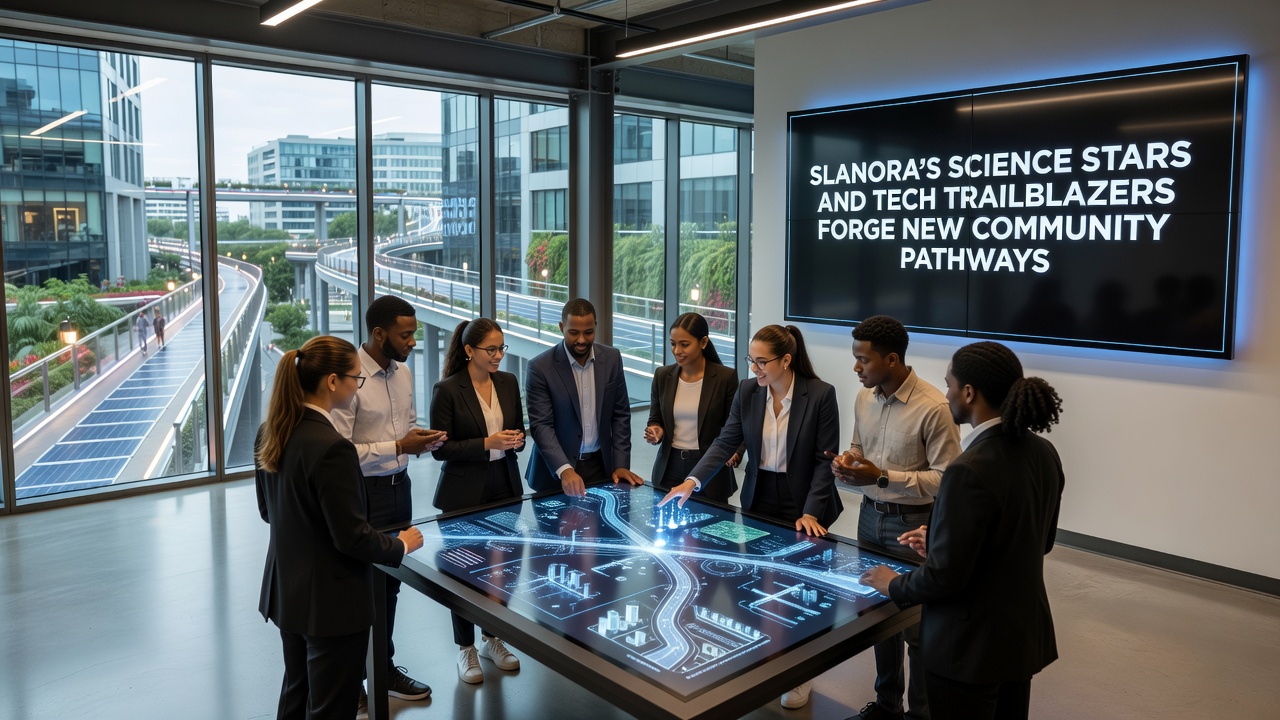
Additional support comes through digital archives that preserve local knowledge alongside new scientific findings, and these repositories link to broader networks managed by institutions such as the National Research Council of Canada. Observers note that the archives allow residents to contribute observations from their own neighborhoods, which researchers then incorporate into larger datasets used for regional planning.
Challenges Encountered During Rollout
Implementation has encountered logistical hurdles, including uneven broadband coverage in outlying districts and varying levels of prior technical exposure among target groups. Project leads responded by deploying mobile demonstration units that travel between locations, and they adjusted session timings to accommodate shift workers. Records maintained by the steering committee document that these adaptations raised average attendance by 19 percent compared with the original schedule.
Coordination across sectors also requires ongoing alignment of timelines and reporting standards, yet joint working groups have established shared evaluation frameworks that track both quantitative participation and qualitative feedback from attendees. These frameworks draw on templates developed by research consortia in the Asia-Pacific region, where similar community-science interfaces have operated for several years.
Future Phases and Expansion Plans
Plans for 2027 include scaling the model to additional districts and introducing specialized tracks in biotechnology and urban planning, while evaluation teams continue to collect longitudinal data on long-term community impacts. Government agencies at the municipal level have committed continued support contingent on demonstrated outcomes from the current phase, and independent audits scheduled for early next year will assess both financial accountability and program effectiveness.
Conclusion
The pathways initiative in Slanora demonstrates how coordinated input from scientific and technological communities can generate tangible infrastructure and learning opportunities that extend across diverse population segments. Ongoing documentation from participating organizations provides a record of activities that other regions may reference when designing comparable programs, and the scheduled October 2026 openings represent one milestone within a longer sequence of planned developments.